Nopcsa Castle in Săcel: the dinosaur baron's family home
A castle said to have been seized for a debt, where the baron grew up who explained why the dinosaurs of Hațeg Country were so small.
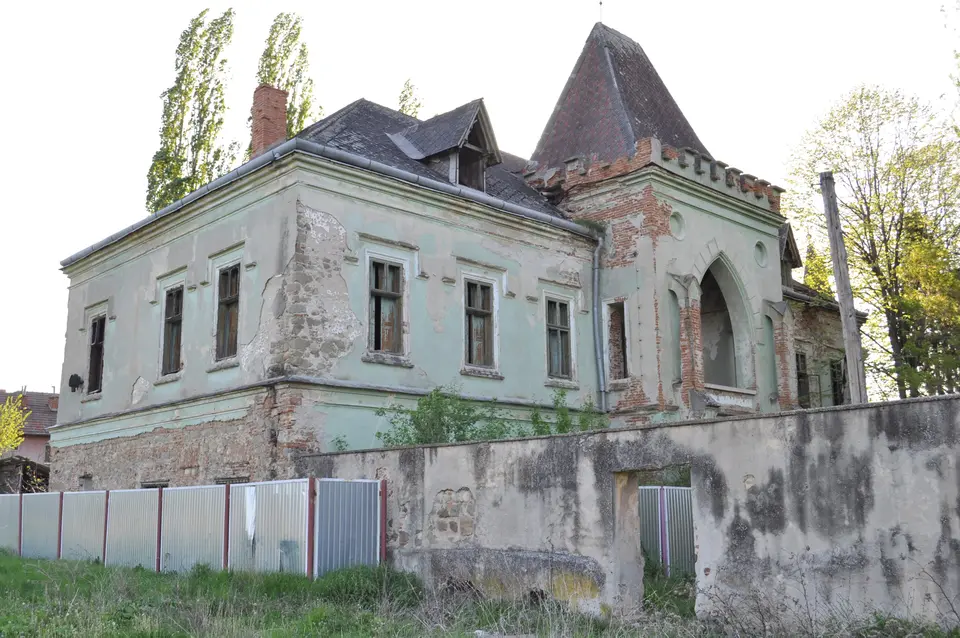
- Region
- Transilvania
- Locality
- Săcel
- County
- Hunedoara
- Nearest national road
- DN68
- Category
- Castle
Taken over for a debt
Oral tradition says the castle at Săcel came to the Nopcsa family through debt rather than inheritance. For several decades the estate had belonged to the Naláczy family. The story goes that they owed so much to the Nopcsas of Silvașu de Sus that Baron László Nopcsa, nicknamed “Fatia Negra” (“Black Face”), seized the property against what he was owed.
In 1872 the estate passed into the hands of the baron’s younger son, Elek. He rebuilt the castle, moved in and ran the land like a modern farm. He was the first man to bring a threshing machine into Hunedoara County.
Elek, also known as Alexis, was no ordinary landowner. Born in the revolutionary year of 1848, he went through the Theresian Military Academy and served as an officer in Mexico, in the hussar guard of Emperor Maximilian I. After the emperor was executed in 1867 he gave up soldiering and came home to Transylvania. In 1876 he married Countess Matilda Zelenski of Arad, and he later moved to Budapest as deputy director of the National Theatre.
Tower, gable and bastion
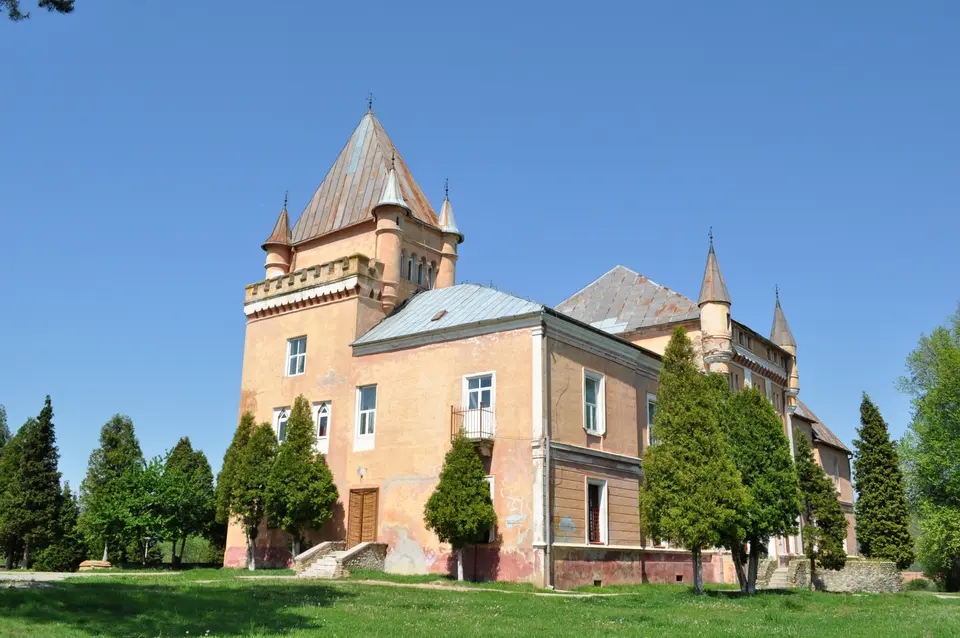
The house has two storeys and a long, narrow plan. A stepped gable rises on the west front. At one corner stands an imposing rectangular tower crowned with battlements, balanced on the east by a small octagonal turret. The main front is pushed forward by a central projection shaped like a bastion, which lends the building the air of a miniature fortress.
None of it is medieval. This is a late 19th-century country seat that borrowed the castle features fashionable at the time, and it is on the list of historic monuments of Hunedoara County.
The baron of the dwarf dinosaurs
Elek’s eldest son was Franz, or Ferenc, Nopcsa, born in Deva in 1877. He was eighteen when he found the first dinosaur bones at Sânpetru, also in Hațeg Country. At twenty-two he published his first palaeontology paper, naming a new species.
He went on to become one of the most productive scientists of the early 20th century. He proposed insular dwarfism to explain the small dinosaurs of Hațeg Country and put forward ideas that later research would take up: birds descending from dinosaurs, differences between the sexes in dinosaurs, their social behaviour. He is counted among the founders of palaeobiology, which he called palaeo-physiology, and published more than a hundred papers on the subject.
Fossils were only part of his life. He made the first systematic studies of the geology of Hațeg Country and of northern Albania, published the first geological map of Albania, spoke Albanian and eight other languages fluently and became one of the founders of Albanian studies. He was a skilled photographer as well, and some of his pictures circulated as postcards. It is said that at thirty-six he came very close to being made king of Albania.
During the First World War he led Albanian volunteers as a hussar lieutenant and worked as a spy in the Retezat Mountains, disguised as a shepherd.
The last of the Nopcsas
After the war Franz was declared an enemy of the Romanian state and had to leave Săcel. His Transylvanian estates were confiscated, and hardship drove him to sell his fossil collection to the British Museum. In 1920 King Ferdinand I pardoned him and invited him to work for the Geological Institute of Romania, and he was allowed back into the castle.
He returned that autumn, and it ended badly. A fight with villagers left him with a fractured skull, he had to be taken to Sântămăria-Orlea for treatment, and the injury marked him for the rest of his life. From 1925 to 1928 he ran the Geological Institute in Budapest. In 1933, in Vienna, gripped by severe depression, he killed his friend and secretary Bajazid Doda and then himself.
Franz was the last man of the family. His sister Ilona had married Count Albert Pallavicini in 1908 and moved to Italy, and the heirs never asked for the castle back.
Visiting Săcel
For years the building stood shut. Pieces of ceiling and façade had already come down, and Hunedoara County Council, the owner, barred entry to prevent accidents. Renovation began in autumn 2019, an investment of two million euros, with the façade replastered and the floors, roof and interior plaster renewed. The castle opened to visitors on 1 September 2025.
Săcel is a village of Sântămăria-Orlea commune, in the south of Hunedoara County, near the DN68, so the Kendeffy castle at Sântămăria-Orlea, where Franz was taken after the fight of 1920, is close by. Sânpetru, where the young Franz found his first bones, is also in Hațeg Country and fits into the same day. At the castle itself, the crenellated corner tower is the part most easily recognised in old photographs of the house.
Closer than you think.
Good to know.
A few useful answers before you set off.
When was Nopcsa Castle built?
The two-storey house dates from around 1872, when Elek Nopcsa took over the management of the estate. He rebuilt the building and moved into it.
Who was Franz Nopcsa?
Franz (Ferenc) Nopcsa, Elek's eldest son, was a baron, adventurer, ethnologist and palaeontologist. He found the first dinosaur bones at Sânpetru, proposed insular dwarfism to explain the small dinosaurs of Hațeg Country and was one of the founders of palaeobiology and of Albanian studies.
Can Nopcsa Castle be visited?
For a long time Hunedoara County Council, which owns it, kept the building closed because of its condition. Renovation began in autumn 2019 and the castle opened to visitors on 1 September 2025.
Is Nopcsa Castle medieval?
No. It is a late 19th-century country seat that borrowed the castle features fashionable at the time: a crenellated corner tower, a small octagonal turret and a central projection shaped like a bastion. It is on the list of historic monuments of Hunedoara County.